A nanofabrication-based approach that transforms single-molecule biophysics from a low-throughput niche technique into a broadly accessible, high-throughput research tool.
DNA-protein interactions — including replication, transcription, and repair — are essential for cell survival and lie at the root of many genetic diseases. Understanding them at the molecular level is fundamental to biology and medicine.
Traditional bulk (ensemble) techniques average over millions of molecules, masking hidden subpopulations and transient conformational states. Single-molecule methods reveal these hidden dynamics but have historically suffered from low throughput and complex, indirect data interpretation.
As a result, powerful single-molecule assays have remained largely inaccessible — confined to highly specialized biophysical laboratories.
Nanofabricated barriers on a glass surface, combined with a supported lipid bilayer and gentle flow, create an ordered array of individually addressable DNA molecules ready for fluorescence imaging.
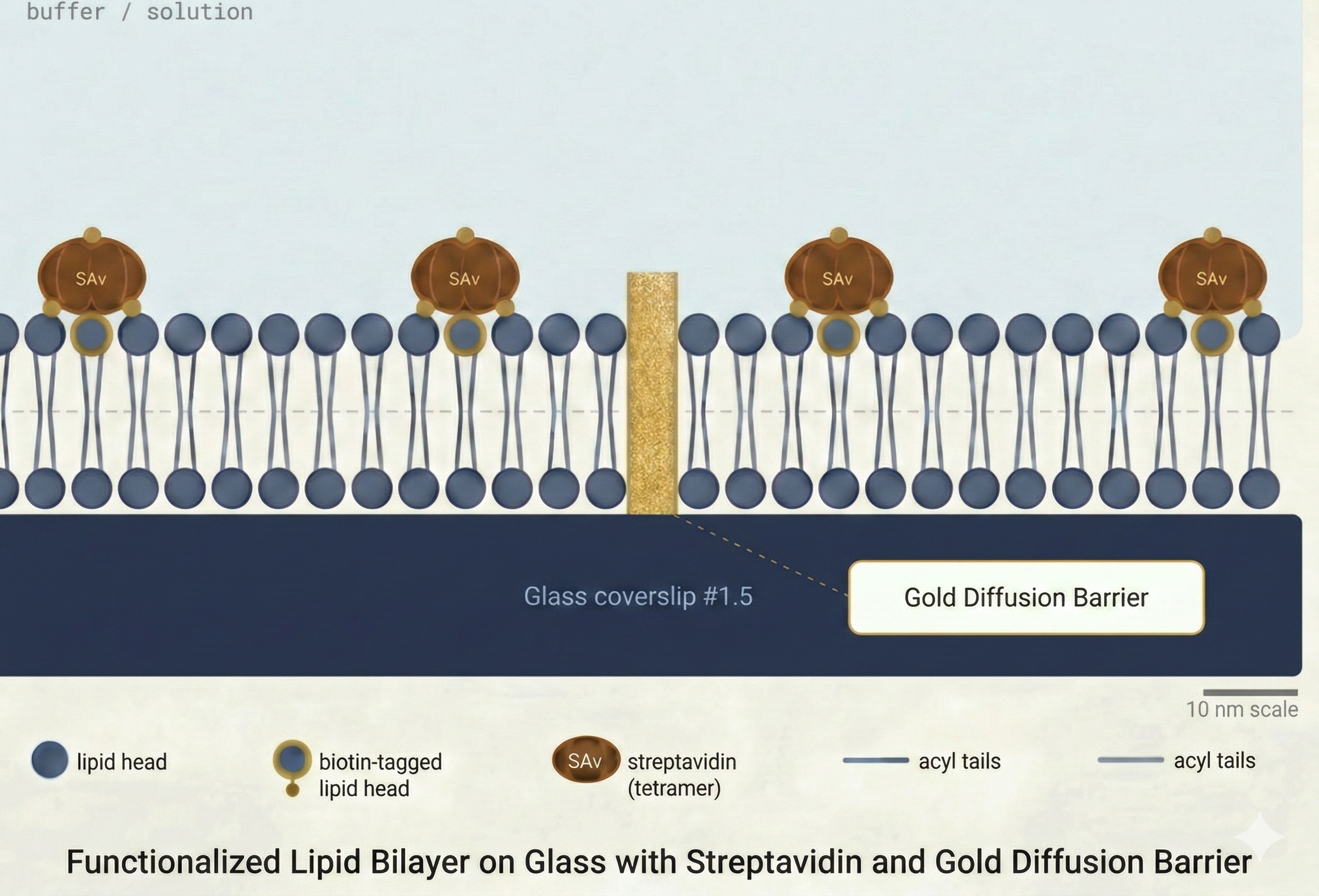
Before any DNA experiment, all surfaces of the microfluidic flow channel are passivated using a supported lipid bilayer (SLB). The SLB serves two critical functions:
The bilayer is formed directly within the flow cell, using standard vesicle fusion protocols compatible with most lipid compositions.
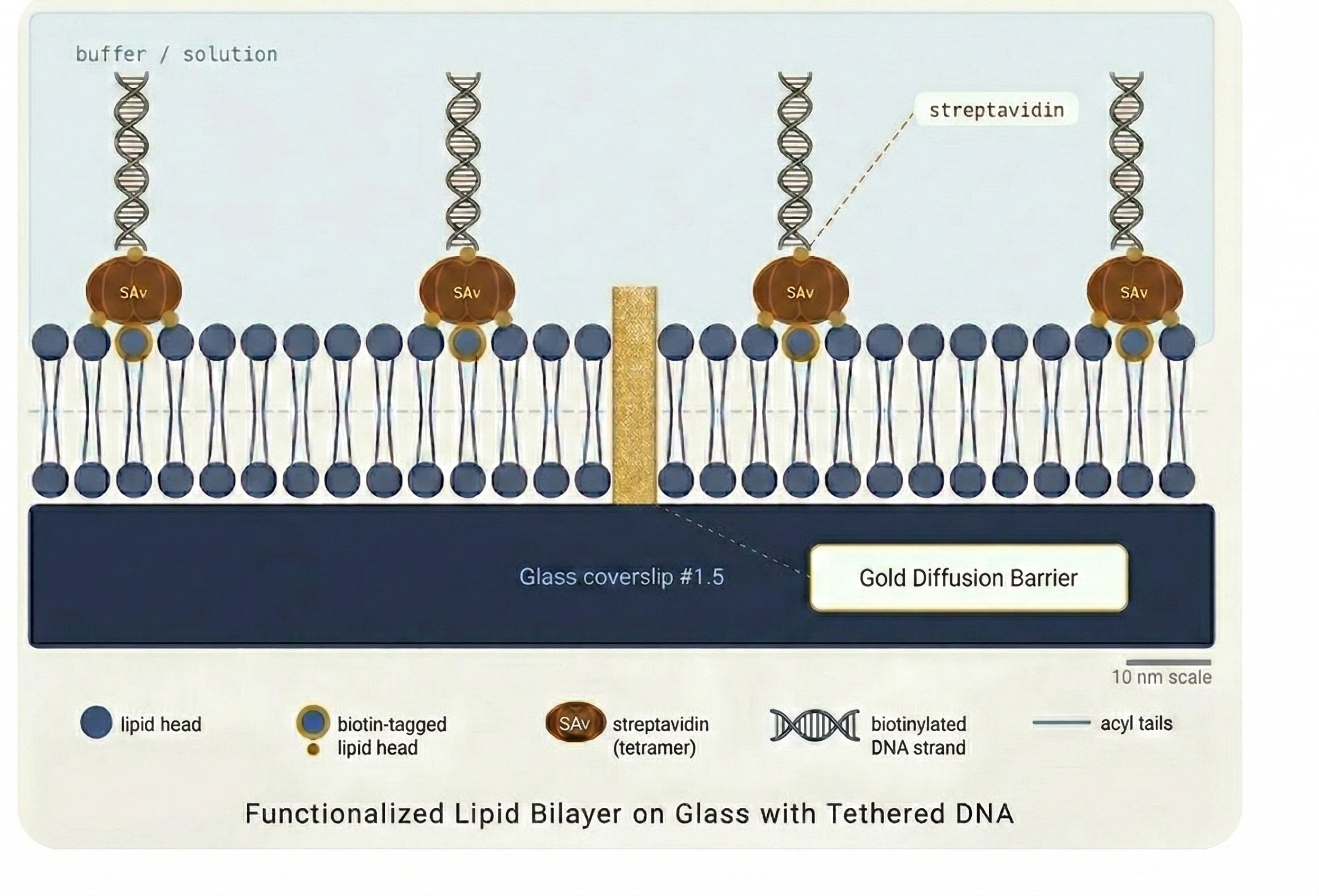
DNA molecules (typically 20–50 kbp in length) are tethered to the supported lipid bilayer via a biotin–streptavidin interaction at one end (single tether) or both ends (double tether).
Once introduced into the flow cell, a small and controlled flow is applied. Because the DNA is anchored to the mobile bilayer, the hydrodynamic drag extends and drives the DNA molecules toward the nanofabricated barriers — without stretching or damaging them.
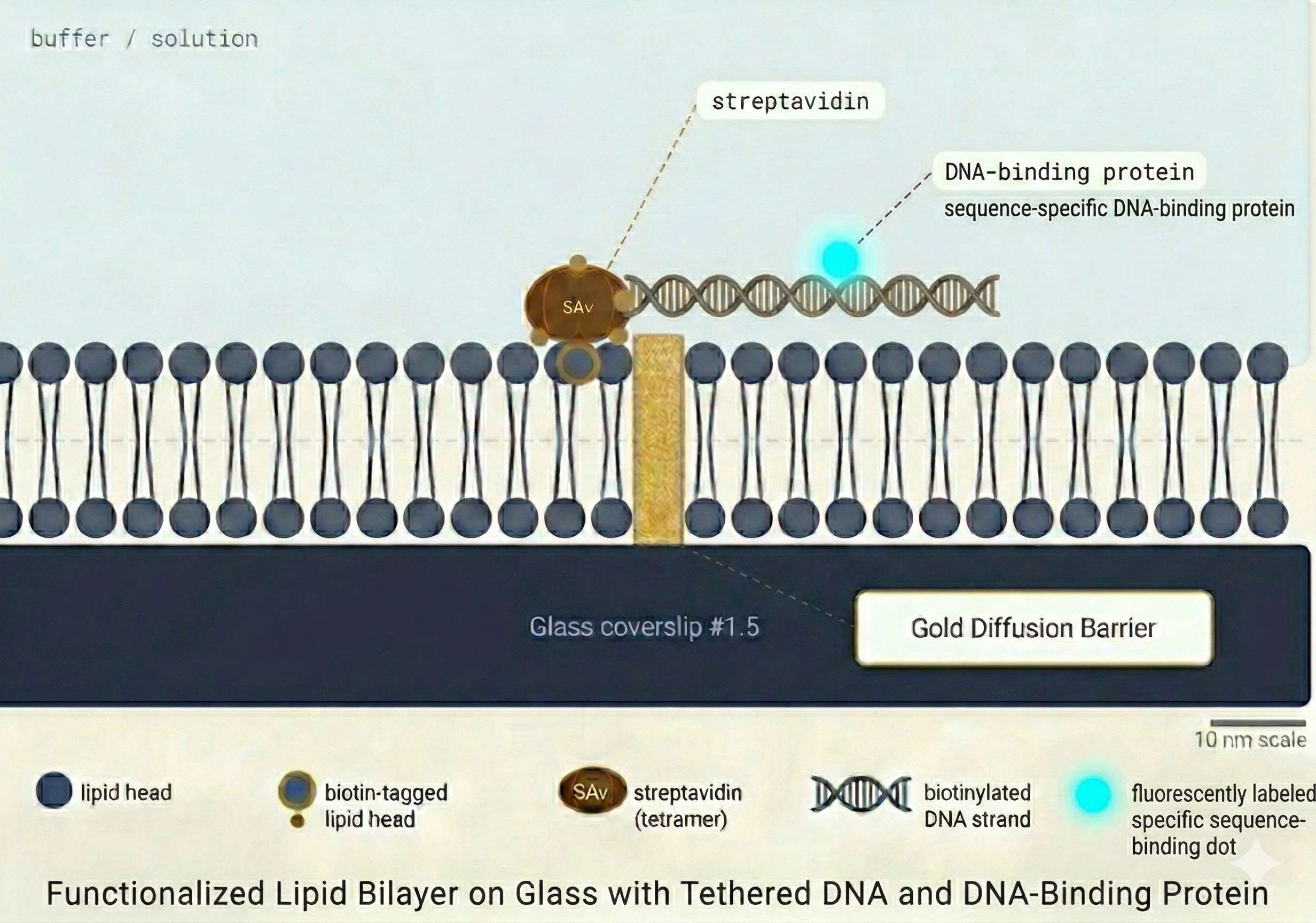
When DNA molecules reach the nanofabricated barriers, the barriers physically capture them at their leading edges. This forms the DNA Curtain — an ordered, parallel array of individually extended and spatially separated DNA molecules, all aligned along the barrier edge.
With flow maintained, the DNA remain extended and accessible. Fluorescently labeled proteins of interest are then introduced, and their binding, diffusion, and activity along individual DNA molecules is visualized in real time using objective-type TIRF microscopy.
Automated tracking scripts extract kymographs for every molecule in the field of view simultaneously, generating statistically robust, quantitative data on diffusion coefficients, dwell times, processivity, and more — from a single experiment.
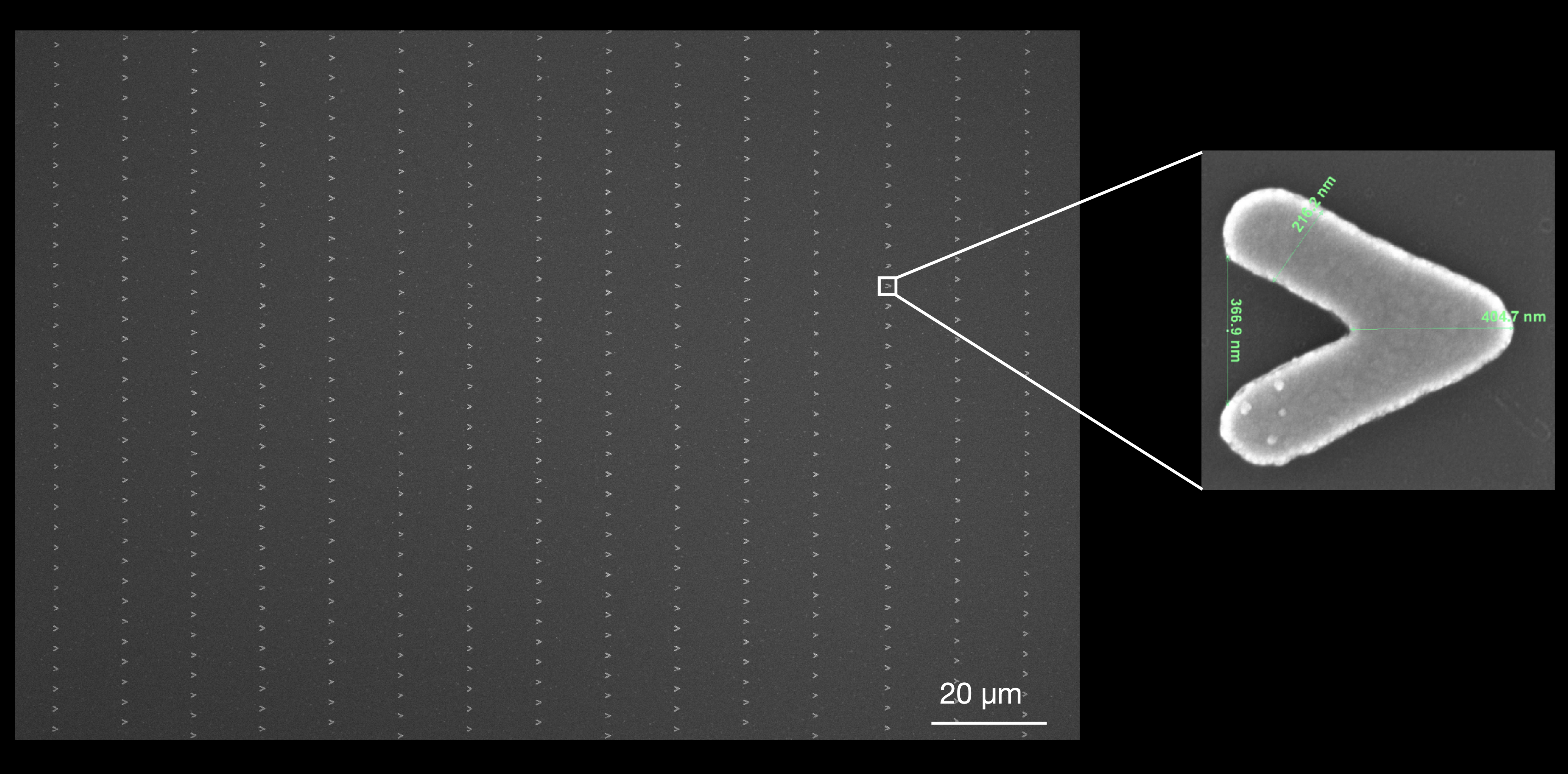
The performance of a DNA Curtain depends critically on the quality and geometry of its nanofabricated barriers. 1NA's expertise in electron-beam lithography enables barrier designs not achievable with conventional approaches.
1NA's proprietary v-shaped barrier design deliberately spaces out individual DNA molecules, ensuring each molecule is well-separated from its neighbor. This geometric spacing enables straightforward automated data analysis with minimal signal overlap between adjacent molecules.
The more traditional continuous zigzag barrier design, perfected by the Greene lab, is also available. This design captures DNA at the leading edges of continuous barrier lines and is well-established in the published literature.
Time-position representations extracted from individual DNA molecules show protein movement, binding, and release events with exceptional clarity. Hundreds of kymographs are generated in parallel from a single experiment.
Mean Square Displacement (MSD) analysis of tracked protein trajectories yields diffusion coefficients. Population histograms reveal heterogeneity in protein mobility not accessible to bulk methods.
Binding dwell time distributions, velocity histograms, processivity measurements, and DNA compaction rates are extracted automatically, providing mechanistic insight into protein function.
Compatible with any objective-type TIRF microscope. Contact us to discuss your setup and research application.